

Skip to content
❄ ❄ ❄ Announcement! Despatches are now closed for 2025 and will resume on 2nd January 2026. Click here for more info! ❄ ❄ ❄

News

RSS
  • September 19, 2010

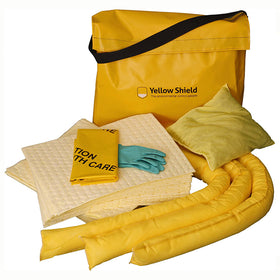
    Spill kit refill types and components

    Spill kits come in many different types, from general purpose kits that can tackle a range of different liquid spills, to chemical spill kits that can cope with chemicals’ aggressive natures and still soak up the liquid spill. However, when a spill kit has been used, you will find that the used items will need replacing. There is no point purchasing a complete spill kit, what you need are replacement items so the spill kit can be refilled.

    Spill kit refills take many different forms, but essentially you just need to make sure that you keep stock of the items that you have used. You can then get in contact with a spill solutions company who will be able to offer direct replacements.

    If however you still want to buy a spill refill kit, there are many available on the market. With some that can act as a direct replacement for the kit you initially purchased. This means you can get the items in the kit, but don’t have to waste money buying another spill wheelie bin or shoulder bag.

    Spill refills come in packs that include items such as absorbent pads, absorbent pillows and absorbent socks with many also including PPE such as disposable gloves.

    Read now
  • September 18, 2010

    Oil clean-up complete after ships collide off Mumbai

    Clean-up operations have been completed after two ships collided of the coast of Mumbai. The two Panamanian ships, the MV Khalija-III and the MSC Chitra collided on the 7th of August. One of the ships, the MSC Chitra, capsized as a result of the collision and spilled its cargo containing diesel and oil lubricants into the sea.

    The clean up operation has taken five weeks to complete as the oil spill covered nearly two nautical miles. The Chief Officer of the Mediterranean Shipping Company (MSC) stated:

    “We have four specialised tug boats standby around the Chitra. These tug boats are equipped with oil spill cleanup measures ... if any oil is there, even small traces of oil, they get to the oil point, they disperse the oil and make sure that the oil does not become a hazard,

    “All the containers that were floating have been retrieved, and put on barges and taken ashore ... .”

    In total over 3,000 tonnes of oil/fuel were spilt so the spill containment processes had to be up to standard to deal with the spill.

    Read now
  • September 17, 2010

    Spill control booms

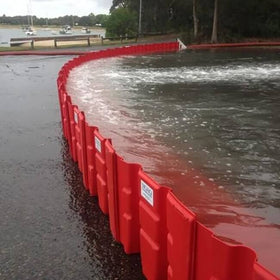
    There are currently two different types of booms used in the spill control market – Spill containment booms and absorbent booms.

    Spill containment booms

    These booms, which were used to great effect after the Gulf of Mexico oil spill, are excellent at providing an emergency system to contain oil or fuel spills on open water.

    Containment booms work primarily as barriers that stop fuel or oil gaining access to a controlled area. The boom usually sits on the water surface and can either be attached to further booms, creating a longer length barrier, or can be attached to a river bank, keeping the boom in situ for as long as needed. They are available in different depths and lengths.

    Absorbent booms

    Absorbent booms can be used to absorb and contain oil spills and fuel spills on an industrial site and at sea. Different types of these absorbents include drain gully socks, marine booms and general purpose land booms.

    Marine booms are perfect at absorbing oils and can repel water, making them perfect for use on rivers and at sea. If a spill has found its way into your drainage system, drain gully socks can be used to remove the spilled liquid from the drain.

    Read now
  • September 16, 2010

    Industrial cleaning equipment

    The cleaning equipment needed on an industrial site can differ greatly from the equipment you might find in the home. Industrial establishments are often exposed to many different substances that require a range of different cleaning techniques. So it’s not simply the case that you can send a member of staff to your local hardware store to pick up some things. You need to have the right cleaning equipment on site for the processes your factory performs and you have to educate your cleaning staff how to use it properly.

    Some cleaning equipment you may require:

    Industrial vacuum cleaners

    These cleaners are more robust then standard household cleaners and can cope with the arduous task of vacuuming industrial deposits. Some industrial vacuums can clean up liquids and others can scrub and dry the floor.

    Floor cleaning equipment

    Industrial mops and mobile mopping stations are perfect in large factories that have to keep work areas clean and tidy. The stations can be filled with a selection of cleaning materials and used by different members of staff.

    Industrial degreasers

    If you have a spill at your industrial site, you need to make sure that when the spill is cleaned using your spill response equipment, an appropriate degreasing cleaner is at hand so the stain and residue can be removed from the floor.

    Read now
  • September 15, 2010

    Oil drum trolleys

    Moving drums on site can be difficult, with many devices used for moving drums cumbersome to use and impossible to find when you need them. A better solution is to use a drum trolley that can also be used as a storage location for the drum.

    Bunded drum trolleys are the perfect device to use to transport individual drums to different locations on site. They have large wheels so can be pulled along easily and are made from chemical resistant polyethylene.

    If a drum trolley is bunded, you don’t have to worry about the drum leaking. The bund capacity on bunded drum trolleys is 230 litres, so they are easily able to collect all the spilled liquid from a 205 litre standard sized drum.

    Any device that you can use to make work activities on site more efficient and hence safer is worth looking at, and a bunded drum trolley is one device that does just this. Because they are fitted with large wheels, they can be pulled to locations around the site for maintenance activities and to and from your cargo bay when a new drum is delivered or the old drum is due for collection.

    Read now
  • September 14, 2010

    Spill response drain gully covers

    If you store large amounts of hazardous liquids such as fuel, chemicals or any other type of flammable liquid, you need to take precautions in case of a spill.

    A spill of any one of the above substances can have severe consequences, not only for your facility, but also to the environment.

    As part of your spill response employees should not only be trained in how to effectively deal with the problem, but they should also be provided with the correct equipment to use, so the spill is contained and then can be cleaned quickly and professionally.

    Drain gully covers

    An important part of your spill response is making sure that no hazardous substances find their way into the drains you have on site. To stop this from happening, you should make sure you use drain covers as part of the spill equipment you have to hand.

    Drain covers come in three types:

    • Mouldable plug rugs

    • Polyurethane covers

    • Neoprene covers

    Each drain gully protector has its own advantages. For example, plug rugs are mouldable to different types of drains and provide a quick water tight seal, whereas neoprene drain covers are quick to deploy and are resistant to water, oil and many types of chemicals.

    If you are unsure which drain cover would be most suitable for your application, you need to contact a spill response specialist who will be happy to recommend a bespoke solution.

    Read now
  • September 13, 2010

    Blowout preventer reaches NASA facility

    Investigations continue into the Deepwater Horizon oil spill disaster that killed eleven workers and spilled over 200 millions of gallons of oil into the Gulf of Mexico.

    In a bid to determine why the blowout preventer failed, BP have lifted the 300 tonne device from the seabed and taken it to a NASA facility for analysis. The blowout preventer should have stopped the explosion and hence the leak.

    The device was lifted from the seabed and carried on the deck of the Helix Q4000 before being transferred to a barge. From there it was taken to the testing facility in Louisiana for further investigation. Tests are ongoing.

    The blowout preventer is seen as a key piece of evidence in apportioning the costs of the disaster.

    In response to the 193 page report BP produced on the disaster, Transocean said it was due to

    “BP’s fatally flawed well design”.

    The cleanup operation is still ongoing in the Gulf, with skimming and spill containment booms still in place. The United States Travel Association are worried that the consequences of the spill could be worse than expected, with an estimated $23 billion dollars lost in tourism revenue over the next three years.

    Read now
  • September 12, 2010

    Collect spills from generators using a plant nappy

    Many industrial sites and building contactors use generators on a daily basis. They do this because there is often not an electrical supply in an area where power for tools or lighting is needed.

    Generators however have a reputation for being not the ‘cleanest’ type of industrial equipment and because they use fuel to power them and oil to lubricate moving parts, fluids can leak quite easily.

    With regulations now extremely strict on the release of these types of fluid into the environment, it’s always advisable to use a drip tray to collect any leaks or spills before they pollute the soil. However, a drip tray can fill quickly with rain water if the generator is used outside so a better solution is needed.

    A plant nappy is a great spill collection device to use under a generator. Instead of rain water collecting in the nappy, it is filtered through the nappy, with the nappy collecting pollutants such as oil and fuel. A plant nappy can also be fitted with a replaceable nappy liner that can be changed when necessary.

    A plant nappy is a great solution for catching leaks from generators and should always be used when using a generator outdoors.

    Read now
  • September 11, 2010

    Bunded storage solutions and storage facilities

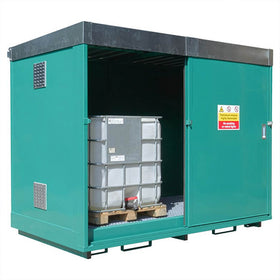
    Bunded storage facilities are really important at an industrial site. The safety of employees and the environment is paramount, and anything that helps a company to further improve safety is essential.

    As part of the oil storage regulations 2001, oil storage at an industrial site should be in a bunded container. So an industrial user may need industrial IBC stores, chemical stores or bunded drum stores as part of its liquid storage set-up.

    Drum storage solutions

    If you need to store oil drums at your industrial site, you have a wide range of drum storage options to choose from.

    Steel bunded drum stores are a highly effective way to store drums. They are available in forms that can store just one drum securely, to storage solutions that can cater for up to 96 drums. Being manufactured in steel they are extremely robust and will hence give you many years of use.

    Some bunded storage containers are suitable for flammable liquids and can be locked. Some have a mesh structure that allows air circulation and splash protection walls.

    If you need a bunded storage solution and are unsure what type of equipment would be the most suitable, it’s important to get in touch with a company who specialises in bunded storage as they will be able to advise you on current products and current legislation.

    Read now