

Skip to content

News

RSS
  • August 25, 2010

    Spill response in the Gulf of Mexico continues

    Spill response teams are still scouring the beaches along the Gulf of Mexico, removing oil and tar balls that continue to wash up on shore.

    Shoreline Cleanup Assessment Teams (SCATS) patrol the coastline every day looking for any new oil that may have found its way ashore. When oil is located, a spill control task force is deployed to the area to eliminate the spilled fluid.

    Some of the teams are working day and night as part of the spill containment and response effort, with 17 teams currently patrolling the shores of the four affected US States.

    Some teams have the benefit of using ‘Sandboni’ machines to scoop up any spilled matter found on the beach. The machines can cover up to one mile a day per machine and ‘skim’ the oil off the surface of the sand.

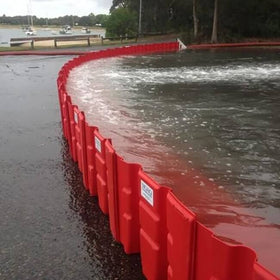
    The spill response will continue as long as oil washes up on the beaches of the Gulf. BP are committed to cleaning the area and as well as using the SCAT teams, they are continuing to use hundreds of miles of booms and skimming vessels on the water surface that use ropes, rotating discs and belts to separate the oil from the water. The collected oil/water mix will be processed in the future and used for fuel.

    Read now
  • August 24, 2010

    Chemical neutralization products

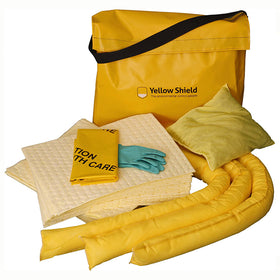
    You may have spill kits on site to cope with spills of various types of fluids, but do you have chemical neutralizing agents so you can treat the area where the spill occurred?

    Chemical spill kits are really effective at removing the liquid from a chemical spill. However you may have to treat the area where the spill occurred to prevent damage to the environment or just to stop anybody coming into contact with the remains of the spill.

    Neutralizing agents can be bought in three main types including:

    • Acid neutralizing agent

    • Alkali Neutralizing agent

    • Bleach neutralizing agent

    The above neutralizing agents can work in tandem with your already purchased spill products and can improve your spill response programme immensely.

    Because neutralizing agents come in powder form they can be sprinkled on the spill area easily and they change colour (turn pink) when the spill is fully neutralized.

    Most chemical neutralizers are safe to handle and environmentally benign, so will not cause further pollution to the environment. Make sure you read the instructions fully before use and if you have any questions regarding the neutralizing agent, you should contact the manufacturer or the supplier.

    Read now
  • August 23, 2010

    Spill Absorbents

    If you are the health and safety rep at an industrial site, you may need to be aware of the different types of absorbent materials available if you need to clean up a spill.

    Absorbents come in many different types to cope with many different types of spills. From oil spills to spills of a chemical nature, there is an absorbent material that can be used to mop it up. Some absorbent materials can also repel water, so can be used at sea or in rivers and streams. These absorbents will only attract the spilled substance such as oil and hence will not become waterlogged reducing their effectiveness.

    Absorbents come in types including:

    • Absorbent pads

    • Absorbent socks

    • Absorbent pillows

    • Absorbent granules

    • Absorbent pads

    Absorbent pads

    Absorbent pads come in an array of sizes and are perfect to keep at various locations on site where there may be a spill. The pads usually come in easy to dispense boxes, so a single sheet can be taken as and when needed to mop up even the smallest spill.

    The type of pads you choose will depend on the substance you are most likely to spill. You can get general absorbent pads, chemical absorbent pads and oil absorbent pads. They also come in different absorption capacities. Check the absorption volume per pad before you buy.

    Read now
  • August 22, 2010

    BP face claims from Transocean

    There seems to be no good news for BP at the moment, as the company has just had to deny claims that it is hiding data on the Deepwater Horizon oil rig explosion.

    The firm that owned the Deepwater rig, Transocean, has alleged that BP is not handing over critical information it needs about the explosion on the 20th of April this year.

    In a letter sent to Barack Obama’s cabinet Transocean’s lawyer wrote:

    "BP has continued to demonstrate its unwillingness, if not outright refusal, to deliver even the most basic information to Transocean.

    "This is troubling, both in light of BP's frequently stated public commitment to openness and a fair investigation and because it appears that BP is withholding evidence in an attempt to prevent any other entity other than BP from investigating,"

    BP has steadfastly refuted the claims made by Transocean stating:

    "We are disappointed that Transocean has opted to write a letter with so many misguided and misleading assertions, including the assertion that BP is 'withholding evidence.

    "We have been at the forefront of co-operating with various investigations commissioned by the US government and others into the causes of the Deepwater Horizon tragedy,"

    Transocean has 249 lawsuits currently being filed against it for damages.

    The news comes just hours after the claims that a plume of chemicals is still floating in the Gulf of Mexico and spill containment and clean-up operations still need further work.

    Read now
  • August 21, 2010

    Drip trays for industrial use

    One of the simplest forms of spill containment and capture devices is a drip tray. A drip tray can efficiently catch drips or leaks from any type of machinery and can so keep the surrounding area clean and safe for employees.

    Some drip trays are especially manufactured for the specific purpose of catching drips and leaks. And others are manufactured so fluid storage cans or small drums can be placed on them. This means the area under the storage cans will not be contaminated as any spilled fluid will be collected.

    Spill and drip trays can be bought in a huge range of sizes and in different materials. Some of the types available include:

    • Polyethylene drip trays – up to 230 litre capacities

    • Steel drip trays – up to 60 litres in capacity

    • Polyethylene drum trays

    Polyethylene drip trays are light in weight, so are extremely easy to handle and can be moved easily to different locations. And any of the above spill trays can be used in conjunction with absorbent pads, making the cleaning and use of the tray even easier.

    Read now
  • August 20, 2010

    Relining bunded tanks

    If you have a pre-existing fuel tank at your industrial site, there may come a time when the tank will need to be replaced. You might even have a fuel tank whose bund has failed or just need to get it checked out to see if it is in a good state of repair.

    Not many people realise that bunds can be refurbished. And bunds can be relined, removing the expense of buying a completely new tank.

    Bund lining is a great solution for those people who don’t have room for a new tank or those whose tank is situated in a position where it is no longer able to be moved because of post-construction at the site. In cases of limited access, a bund liner is often the most cost-effective solution.

    Some older bunds can also be relined using a GRP lining system to bring them in-line with current storage regulations. And lining is often much cheaper than the decommissioning and removal of your old bund and purchase and installation of a new bunded tank.

    Any tank that many be suitable for refurbishment needs to have a comprehensive survey to find out its current condition. You just need to contact a company that specialises in bunded tanks to find out more.

    Read now
  • August 19, 2010

    Safety dispensing cans

    Spill prevention is extremely important in any industrial environment. In a factory, many different types of liquids are used on a daily basis, some hazardous, some not. For all these liquids a safe method of containment should be put into place and a safe system of liquid distribution adopted to prevent spills.

    If you only use a small amount of liquid at a time, a good idea is to use small safety dispensing cans. Safety dispensing cans come in a few types including:

    • Bench cans

    • Plunger cans

    Bench cans

    Bench cans have an ingenious mechanism that is pushed down so dispensing the desired liquid, such as a cleaning solution, onto a cloth. The spring loaded plate also acts as a fire arrestor when the lid is not on so vapours cannot escape. The cans feature safety stickers and are made out of stove enamelled tern-plate.

    Plunger cans

    Plunger cans work in a similar way to bench cans, but dispense a metered amount of liquid at a time. They only release liquid when the plunger is pressed and any extra is drawn back into the can when the plunger rises. Therefore the possibility of ignition of any flammable liquid is minimised. These cans can also be operated using a one-handed action.

    Read now
  • August 18, 2010

    The row over the BP oil spill lingers on

    The US government has reported that 4.9 million barrels of oil leaked from the destroyed Deepwater Horizon oil well after the explosion that killed eleven workers in April. The well has now been capped but it is officially the largest oil leak ever.

    The spill in the Gulf of Mexico has now cost BP an estimated $6.1bn which includes costs for the spill containment, the spill response, the relief drilling and solving the problems caused by the damaged well. This sum of money also includes money spent on grants to those States hit by the spill and $319m compensation to those affected by the oil spill.

    There are now over 30,000 people working on the spill response and clean-up, including those who are laying spill containment booms and dispersing the oil. But BP is now confident that no more oil is leaking. The company stated:

    "BP believes the static kill and cementing procedures have been successful,"

    It is estimated that approximately 25% of the oil is still at sea or on shore, with 24% dispersed, 25% evaporated or dissolved and the rest either recovered from the leak site or burned or skimmed.

    Read now
  • August 17, 2010

    Bunded diesel storage and dispensing tanks

    Bunded diesel tanks are the perfect choice if you need to store or dispense diesel. And, no matter what space you have at your industrial site, you will be able to find a diesel tank to suit. Even if the tank has to be customised to meet your requirements.

    Steel bunded fuel tanks can store diesel and other types of fuel up to capacities of around 60,000 litres. Manufactured in accordance with the latest Oil Storage Regulations 2001, they also meet all current OFTEC standards and are perfect for large scale fuel dispensing and storage.

    The bund in these steel storage containers is capable of storing fuel up to 110% the capacity of the tank, so they are perfectly capable of holding any type of leak. Large sized tanks are ideal for the refuelling of vehicles and machinery you may have on site and also for running generators in emergency power systems.

    These type of tanks can be fitted with a range of different gauges, alarm systems, pumps and other accessories and include manhole access, lifting eyelets, box section stiffeners and have a large cabinet for any pumps or control systems needed.

    Read now