

Skip to content
❄ ❄ ❄ Announcement! Despatches are now closed for 2025 and will resume on 2nd January 2026. Click here for more info! ❄ ❄ ❄

News

RSS
  • August 16, 2010

    Deepwater drilling and spill disaster procedures

    With BP still feeling the effects of the Deepwater horizon oil rig disaster, questions are starting to be asked to what levels the oil companies will go to find the last remaining oil reserves.

    High oil prices have meant that deepwater drilling is no longer price prohibitive and there are a number of deepwater sites currently in operation across the globe, seven of which came online in the Gulf of Mexico in 2008, making 31 rigs in total in the area drilling for oil. The increase in numbers of these rigs can be seen easily if compared to just the three rigs that operated in the area in 1992.

    Advances in technology has made deepwater drilling a lot easier and wells at a depth of 500m below the surface, ultra-deepwater wells, are becoming more common.

    US President Barak Obama remains steadfast however in that the right lessons need to be learned from the disaster and is going to look at other sources of fuel.

    Until this happens, it’s important for oil companies to have the right disaster protection procedures in place, including the right spill containment and spill clean-up systems and equipment.

    Read now
  • August 15, 2010

    Some different types of spill kits

    You may think that spill kits would be quite costly, considering the technology that goes into producing the product, but this is simply not the case.

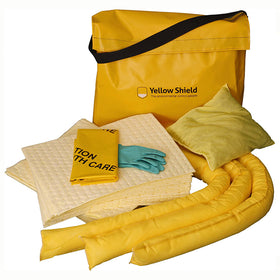
    Many spill kits come in compact sizes and contain just the things you need for the application they are bought for. For example, shoulder bag oil spill kits, which come in a bag that can be carried easily over the shoulder, contain equipment including absorbent pads, absorbent socks, an absorbent pillow, gloves and a disposal bag for the used absorbents. And they are really cost-effective.

    Other spill kits come in wheelie bins and can contain not only all the components of the oil spill kit shoulder bag but extra absorbents with a larger capacity. The bin is also easily mobile, so can be pulled to the site of the spill easily, it’s the perfect kit to have in the workshop, or at various locations around your factory should a spill occur.

    There are of course much larger and more comprehensive spill kits than these that have a capacity of over 1000 litres. These are suitable for absorbing fuel spills as well as oil spills.

    You just need to have a look online to choose a suitable spill kit for the size of your application.

    Read now
  • August 14, 2010

    Hazardous substance storage cabinets

    At industrial facilities there are many health and safety regulations that have to be followed. These include the storage of hazardous liquids and other substances.

    Hazardous substances need to be kept in the right environment, under the right conditions, with some under lock-and-key with only designated key holders able to access them. This is why using the right type of safety cabinet or storage cage is so important.

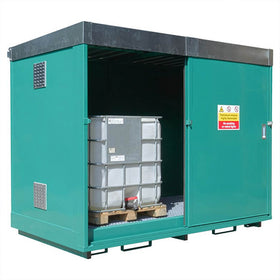
    Safety cabinets are available in a range of colours and can store liquids such as acids, flammable liquids, pesticides and alkalis. Some cabinets are also manufactured to withstand the effects of fire for a designated time period, which is especially important for those substances that are flammable.

    Safety cabinets are available in many sizes with most having a number of adjustable leak proof shelves and three point locking systems. If you have a look online at the selection available, you will note that some are even supplied with a sump tray to catch liquid spills.

    It’s important to keep up to date with the current regulations, storing hazardous liquids under your work bench or on a standard shelf is a definite no-no; you need the right safety cabinet.

    Read now
  • August 13, 2010

    Absorbent booms and socks

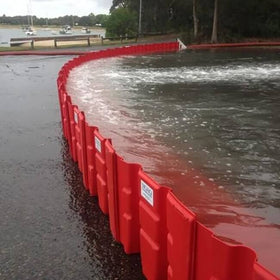
    Many people will be familiar with booms such as those used recently at the oil spill disaster in the Gulf of Mexico. The booms used there were primarily spill containment booms and were used to keep the oil on the water surface from reaching landfall. There is also another type of boom that is used just as frequently however called the absorbent boom.

    Absorbent booms are similar in shape to containment booms, but where containment booms primary objective is to contain spilled liquid, absorbent booms are used to soak the liquid up. Most absorbent booms are water repellent and will only attract hydrocarbons such as oil. Hence they are perfect to use on large bodies of water to clean up spills.

    Marine booms can also be tied together to create a long length of absorbent material which makes ‘scraping’ the surface of a large body of water easy.

    General purpose land booms are excellent at containing and soaking up spills in factories and industrial establishments. And drain gully socks are the perfect absorbent to use to remove spilled liquids that may have found their way into local drains.

    Read now
  • August 12, 2010

    Material handling equipment – pallet trucks

    If you use IBCs or other heavy liquid storage containers you will need some way to transport them around the factory or just manoeuvre them into position. Most of these containers come supplied on pallets so a forklift may be able to do some of the initial hard work for you. But a forklift cannot always get into hard to reach places or places with limited head-height. The tool to use here of course is a pallet truck.

    Hand pallet trucks

    Hand pallet trucks are easy to operate and the pump action means loads can be lifted effortlessly. The hydraulic system on these trucks can lift the forks in 12mm increments up to around 120mm in height.

    Other benefits include:

    • Leak proof hydraulic system

    • 210 degree turning radius

    • Over load valve

    • Controlled rate of descent lowering system

    • Fork width – 160mm

    • Dual hand lever pedals

    • Dual foot pedals

    Hydraulic high lift pallet trucks

    These trucks are perfect to use to load and unload IBCs from trucks. The strong telescopic lifting jack makes lifting pallets easy so no manual assistance is needed.

    Some specifications include:

    • 210 degree turning circle

    • Grease proof fittings

    • Controlled rate of descent lowering system

    • Over load valve

    • Fork width – 160mm

    • Capacity – 1000kg

    Read now
  • August 11, 2010

    Incident response planning and spill clean-up

    In our last article we discussed the importance of having an incident response plan in place so you can cope with any type of spillage at your industrial site. We also listed a few ways by which a spill could occur. In this article we will briefly discuss the areas a spill incident could affect and the impact it could have, not only on the environment but also on your company.

    Spills can happen at any time and the spilled liquid can find its way into systems such as:

    • Surface waters

    • Marine eco-systems

    • Standard drainage systems

    • Ground water

    • Soil

    Some toxic substances also produce noxious fumes, which can be a hazard to persons and the environment.

    The effects of a spill can sometimes be seen immediately, but all too often they are not noticed until it’s too late and the effects are long lasting. This is why it’s important to have an incident response plan in place.

    A spill may not only damage the environment however, it may also negatively affect your reputation. You will be responsible for the clean-up costs and there may be fines imposed or costs to be met at court.

    Having spill kits in place at all areas of high risk and making sure that your employees are adequately trained to respond quickly can really help. But these alone are no substitute for a detailed response procedure.

    Read now
  • August 10, 2010

    Incident spill response planning

    In our last article we briefly mentioned the Environment Agency’s Pollution Prevention Guideline 21 (PPG21) – Incident Response Planning. In this article we will look at the guidance laid out in this document in a little more depth.

    PPG 21 gives important advice to the industrial fluid user, who needs to look at the systems that are currently in place at their industrial site and hence make improvements if necessary.

    Having an incident response plan in place will reduce the time it takes for you to react to any spill and hence reduce the environmental impact of the spill. PPG 21 states the reasons why you need a plan, what information should be included in the plan, indicates the persons who should be involved in the plan and discusses the procedures you may need to put into place to implement the plan.

    If your site uses harmful substances such as oil or chemicals, it has the potential to pollute the environment if any of these substances are released. And, although you may already have systems in place, these may not be adequate, or you may not have thought of some of the areas from which a leak or spill could occur.

    Some causes of spills at your site include:

    • Containment vessel failure

    • Overfilling of vessels

    • Spillage during filling of vessels

    • Vessel connection failure or tap failure

    • Improper storage of liquids in incorrect vessels

    There are of course many more places where a leak could occur. In the next article we will discuss the impact a spill from your site can have on the environment.

    Read now
  • August 9, 2010

    Pollution incident response guidelines

    Many industrial sites use a variety of liquids to ensure the correct functioning of the machines that they use, with oil the primary fluid used. Oil is however not a clean fluid and as such many sites have to make sure that machines are kept clean and the oil that is used is not spilt and hence does not pollute the environment.

    The oil used in large industrial machines needs to be changed on a regular basis, as is the same in your car engine, so there is the likelihood of leaks or spills occurring. The used oil has to be disposed of correctly and there are specialised companies who will do this for you. But what happens if you have a leak or a spill when changing the oil? And, have you processes in place to cope with situations like this?

    If you have an oil leak at your industrial site, you must make sure that the oil does not find its way into the drainage system. Any oil spilled should be cleaned up using appropriate spill kit equipment so it can be disposed of properly. The Environment Agency has produced a document to help companies plan an incident response strategy. It’s called PPG 21 (Pollution Prevention Guidelines 21) and can be found on the Environment Agency website.

    Read now
  • August 8, 2010

    Taking the correct health and safety measures in your workplace is essential

    The majority of employers nowadays realise the importance of strictly adhering to health and safety measures in the workplace, as the potential consequences can be extremely devastating.

    In addition to posing health risks to employees, failing to impose an adequate health and safety system could result in severe financial penalties.

    Whilst health and safety is important in any industry, it is even more vital in environments where hazardous substances are present.

    Chemicals and oil are just a couple of substances which can have far reaching effects if they’re not handled properly, so it’s essential that all employees are fully trained in order to minimise the risks of accidents involving hazardous substances.

    Businesses whose staff regularly work with hazardous substances not only have a responsibility to ensure that staff are equipped with all of the correct equipment and knowledge to carry out their duties safely, but also that they are fully trained in how to deal with hazardous substances when they leak or are spilled.

    It goes without saying that ensuring that the correct spill control and containment equipment is easily accessible in the workplace is vital, and enrolling staff on a spill training course can also be extremely beneficial.

    Assess all of the risks in your workplace and ensure that the proper health and safety regulations are firmly in place.

    Read now