
Skip to content
❄ ❄ ❄ Announcement! Despatches are now closed for 2025 and will resume on 2nd January 2026. Click here for more info! ❄ ❄ ❄

News

RSS
  • July 28, 2010

    Enrol your staff on a spill training programme

    When you own a business which requires staff to work with and around hazardous and potentially hazardous substances such as oil and chemicals, it’s vital that you ensure that they are all fully aware of the correct procedures to follow in the event of a spill.

    Even sites which have very strict preventative measures in place can fall victim to a spill, which is why enrolling all staff on a spill training programme is of extreme importance.

    Whatever industry you work in, as spill training can be carried out on your work site, you can rest assured that staff will receive bespoke training which is relevant to the size and type of the potential spills which they may find themselves dealing with.

    Effective spill training will not only prepare your staff for quickly and efficiently dealing with spills, it will also educate them on the potential risks which spills pose- to the workplace, the environment and health.

    Educating staff on penalties for breach of health and safety is another vital aspect of training which can have a significant impact on their attitude towards spills.

    There’s no doubt that staff training is just as important as ensuring that you’re equipped with the correct spill control and containment equipment.

    Read now
  • July 27, 2010

    Drum storage units are another weapon in your fight against spills

    Although the majority of the time you can never predict when you will find yourself tackling a spill, there are many effective preventative measures which you can take in order to minimise the risks.

    There are several industries today in which the storage of oil, fuels and hazardous substances is commonplace, and it goes without saying that, for these industries it is absolutely imperative that every possible precaution is taken in order to stop any spill occurring.

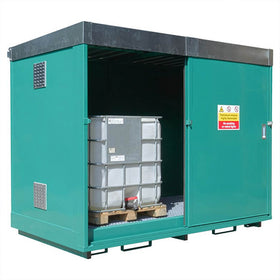
    If you work with substances which are stored in drums, you will be aware that even small spills can lead to big problems, and for this reason, ensuring that drums are stored safely and correctly is vital.

    This is where drum storage units come in. These units are designed to hold 205 litre drums, and help to minimise the risk of spills by keeping drums safe, secure and firmly out of the way.

    However, in the event of a drum spillage, these storage units are also great for spill containment, and as they are constructed from steel and boast anti corrosion properties, the after-effects of any spill can be significantly reduced.

    Drum storage units are the perfect way to gain added peace of mind and provide extra protection to staff and to the working environment.

    Read now
  • July 26, 2010

    Absorbents colour coding and uses

    With the array of absorbent materials on offer, from different manufacturers, to clean up spills how do you choose the right kit? Or know what liquids different absorbent materials will deal with?

    Perhaps the first thing to consider before buying absorbent materials or spill kits is to look at the different potential spill hazards you have on site. Do you use chemicals? Do you use fuel oil?

    Absorbent material products to clean up spills come in three different types - general absorbents, oil absorbents and chemical absorbents and these are now usually colour coded.

    • general absorbents – colour coded grey

    • oil absorbents – colour coded white

    • chemical absorbents – colour coded yellow

    All three types of the above absorbents will absorb oil, so it’s worth considering this when making your choice. However, oil only absorbents will not soak up water so are perfect to use outside and also if there is a chance that oil and water may mix. They are thus used heavily in removing surface oil from spills in water courses and from the ocean.

    Chemical absorbents are the other more expensive option and have a wide range of substances that they can absorb, but are best employed where chemical spills may happen due to their cost constraints.

    Read now
  • July 25, 2010

    Outside drip trays and plant nappies

    If you use generators or pumps at your industrial site, best practices needs you to make sure that fuel spills from these devices do not make their way into the surrounding environment. Legislation is strict regarding prevention of flow of pollutants into drains or water courses, with large fines handed out if you are found doing this.

    The best way to capture spills from machinery is by using a drip tray. However this can sometimes prove difficult outside, as conventional drip trays will also capture rain water and quickly overflow. Another problem with this is that any fuel/water mixture still needs to be collected and processed by a waste collection contractor, which can prove costly.

    One solution that is excellent to use indoors or outdoors is the plant nappy. The plant nappy can actually filter any rainwater that enters the tray, so clean rain water can penetrate through the nappy and leave just the contaminated fuel. This means the nappy will rarely overflow and hence it can be used for a long period of time before it needs replacing. And when you use nappy liners, which can be put inside the nappy, the nappy can be used again and again, with only the liner needing replacement.

    Read now
  • July 24, 2010

    Rotary and siphon pumps

    If you use drums or IBCs at your industrial site, you will need a way to pump liquid from these containers into other vessels. Drum pumps are the perfect device to use here. However, which drum pump should you use?

    Drum pumps come in types such as:

    • Level operated pumps

    • Rotary pumps

    • Siphon pumps

    • Electric pumps

    Rotary drum pumps

    Rotary drum pumps are an excellent way to remove stored liquid from a drum. They pump 0.4 litres per revolution and are suitable for all petroleum products when the container is suitably earth bonded. The rotary action is easy to operate and the pump is robust and durable.

    Siphon drum pumps

    Siphon pumps can be used on almost all liquids including solvents and acids and are virtually corrosion proof. The pumps are available in 25 litre and 210 litre pumping capacities and as long as the fluid receptacle is at a lower level than the fluid in the container, no further effort to pump is required.

    Moving liquid from one container to another needs to be done in many industrial applications, but if you have the right equipment, it can be done really easily.

    Read now
  • July 23, 2010

    Fuel dispensing cubes

    If you need to store diesel or gas oil at your industrial site, but only need to store a relatively small amount, a fuel dispensing cube is the perfect option. Fuel dispensing cubes come in either 200 litre or 460 litre capacity sizes with the option of a 110V operating system or a 240V operating system.

    Manufactured and designed to the latest fuel storage regulations, the fuel dispensing cubes feature an all steel construction with a lockable lid. Generator flow and return pipes are fitted as standard for ease of connection and the tanks are supplied with a hand pump or optional electric pump, three metres of hose and have a 110% bund capacity in case of a fuel leak.

    One of the best things about fuel dispensing cubes is that they are compact and stackable meaning you can move them around site easily if necessary. And if you only use a generator infrequently, they are a cost-effective fuel standby option.

    It’s important to comply with the relevant fuel storage regulations if you are storing fuel at your industrial site. And if you choose a fuel dispensing cube you can do just that.

    Read now
  • July 22, 2010

    Shoulder bag spill kits

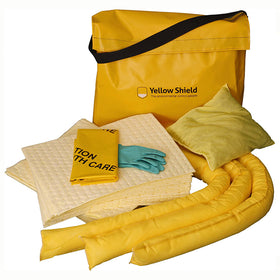
    If you need to carry a spill kit with you as part of your daily work activities, you need to use one that can be easily carried, but also contains everything you might need if you have to deal with a spill. An over the shoulder spill kit is the perfect kit to use here.

    Over the shoulder spill kits are designed to be carried easily by the user. And a shoulder bag can contain a huge amount of spill cleanup devices. So if you need to keep the bag handy in your vehicle, in the workshop or even hung at the ready in your warehouse, this type of kit is a great one to choose. Because a shoulder bag can be carried easily, your spill response time will be reduced and hence the spill can be controlled and cleaned quickly and efficiently.

    A standard general over the shoulder spill kit will contain things such as absorbent pads, socks, pillows and PPE gloves. It will also contain a disposal bag so the used materials can be disposed of properly.

    A shoulder spill kit is a really cost effective tool and is a great way to be ready in case you need to clean up a spill.

    Read now
  • July 21, 2010

    Environment Agency PPGs

    The Environment Agency has strict guidelines and environmental regulations in place to prevent the pollution of our environment. And to do this, they have developed a series of Pollution Prevention Guidelines (PPGs) that offer advice to various business sectors to stop pollution and hence comply with the law.

    There are thousands of pollution instances every year in the UK, with an unfortunate number going unreported. Most of these originate from factories, farms and transport but they can also originate from your home. This doesn’t have to be the case though, as most of these incidents can be avoided given suitable equipment and prior knowledge.

    If you are responsible with your waste management, you can not only comply with current legal regulations, you will also be able to better manage the waste you produce, which can actually cut the cost of your waste disposal.

    The costs of cleaning up pollution, as can be seen by BP, can be huge, whereas the cost of implementing safety systems and buying the necessary equipment can be relatively small. So it seems improbable not to follow the guidelines set out by the Environment Agency.

    The guidance PPGs from the Environment Agency go into detail regarding the steps each business must take to stop pollution, whether by following the oil storage regulations or by using the right spill containment devices.

    Read now
  • July 20, 2010

    BP counting the cost of oil leak

    As BP starts to release the pressure on the capped oil well in the Gulf of Mexico in an attempt to stop seepage through the surrounding bedrock, it has emerged that they have now paid $200m already to over 30,000 claimants following the Gulf oil disaster.

    The oil spill in the Gulf of Mexico is the most damaging environmental problem the US has ever seen. Spill containment booms and skimmers are still being used on the surface, to try to stop the worst of the spill reaching landfall.

    The oil spilt from the Deepwater Horizon rig has now damaged hundreds of miles of US coastline with the damage to the region’s economy at unprecedented levels. The total cost of dealing with the spilt oil is now estimated to be over £3.5billion. BP is currently evaluating 17,000 further claims for compensation with over 60,000 more people currently in the process of discussing their claims with BP.

    David Cameron, the British Prime Minister, is meeting US President Barak Obama today, with the BP oil spill expected to be high on the agenda.

    Read now