

Skip to content
❄ ❄ ❄ Announcement! Despatches are now closed for 2025 and will resume on 2nd January 2026. Click here for more info! ❄ ❄ ❄

News

RSS
  • July 19, 2010

    Concerns over capped well in the Gulf of Mexico

    BP’s capping of the Deepwater Horizon oil well was completed on Thursday, with early results boding well. As part of a 48 hour test, the flow of leaking oil was steadily slowed to a stop, the first time oil has not been leaking since the 20th of April.

    The spilled oil from the well has been leaking into the Gulf of Mexico since the Deepwater Horizon rig exploded, killing 11 workers. All of BP’s attempts to stem the flow previously had resulted at best in reducing the amount of oil that was flowing into the sea.

    Early results showed that the capped well was building pressure, a good sign. If the pressure increases it shows that the oil is not being forced into pockets under the sea floor or finding another way through to the surface. However, just this morning, concerns were raised as the pressure did not get up to expected levels, prompting fears that the oil was finding another way through the undersea bedrock.

    Because of this latest development, the US government has asked BP to open the capped well as soon as possible, so oil can be collected at the surface. BP has confirmed that this process will take about three days to complete and during this time oil will leak uncontrollably into the Gulf again. BP had hoped to keep the cap in place until drilling on two relief wells was completed.

    Read now
  • July 18, 2010

    Single skin fuel tanks

    Single skin fuel tanks are not commonly used, due to restrictions imposed by the Oil Storage Regulations because they do not contain a bund. But they can be used in some instances and because they are single skinned, they can be quite cost-effective. Other benefits of single skinned tanks include their high impact strength and their requirement for little or no maintenance.

    Single skin fuel storage tanks can work really well in the storage of heating fuel oil in domestic situations. You have to make sure however that there are some pre-requisites.

    • The tank is fitted over 10 metres away from a controlled water supply

    • It is fitted over 50 metres away from a well, borehole or spring

    • The capacity must not exceed 2,500 litres

    • A tank should not be installed where any spill could run into controlled waters

    The rules and regulations are strict and need to be adhered to, so it’s always worth seeking professional advice before buying. Supplier of these tanks will usually only be too happy to help and should be able to answer any other questions you may have.

    Read now
  • July 17, 2010

    Polyethylene drum funnels

    If you frequently dispose of waste liquids such as used oil into drums, you will know how messy the process can be. Care must be taken so the liquid is funnelled into the drum and not spilled. To reduce the number of spills and make the pouring of waste liquids into drums and IBCs a lot easier, polyethylene drum funnels can be used.

    Polyethylene drum funnels are the perfect device to have on site to reduce the number of spills. They fit neatly onto the top of 205 litre drums or IBCs and can also be used on a number of different other liquid storage containers.

    The large surface area on the top of the polyethylene funnel makes pouring waste liquids easy and because it is made in durable, hardwearing polyethylene, the funnel requires little maintenance so will have a long lifespan.

    Polyethylene drum funnels are supplied with a lid that can be closed when the funnel is not in use, keeping the waste liquid safely stored. They are available in a high visibility yellow colour and a perfect alternative to the difficult to use standard funnels that many industrial sites use.

    Read now
  • July 16, 2010

    Bunded tank lining

    A quick look online is enough to see that there many different types of bunded tanks available. From bunded tanks made in steel, to tanks in weather resistant polyethylene, they are available in many different sizes and can even be custom built for your specific application. However, if you have already got a bunded tank on site and are only replacing it because it is in a poor state of repair, have you considered relining the bund in the tank?

    Some tanks can be serviced, repaired if necessary and relined, which is the perfect way to save money instead of spending heavily on a new installation.

    Bund refurbishment

    In some situations where equipment has been installed around the existing bunded tank, it may be impossible to remove the old tank without having a serious impact on your business. In situations like this, you can refurbish your old tank instead of paying for the decommissioning, removal, manufacture, and installation of a new bunded tank.

    Some old systems can be upgraded with the installation of a new GRP lining system, bringing the bund up to current legal requirements. The bund refurbishment company will conduct a brief survey of your existing bunded tank to check for suitability.

    Read now
  • July 15, 2010

    Spill control drain covers

    If you spill a hazardous substance on site, you will have to deal with the spill as quickly as possible. This is so it does not get any worse and affect the surrounding area or find its way into the drainage system.

    Spills should be mopped up using the right type of spill absorbent materials. And if you are well equipped, you should have different spill kits on site to cope with every type of potential spill. However, to stop the spill polluting the environment, you will need to stop the spilled liquid entering the drainage system. And the best way to do this is by using spill control drain covers.

    Spill control drain covers currently come in three different types. Re-usable neoprene covers, high visibility polyurethane covers and mouldable clay covers.

    Neoprene drain covers

    Neoprene drain covers are quick to use and are resistant to water, most chemicals and oil. You can use them again after washing and the cover can be used on any type of surface.

    Polyurethane drain covers

    Polyurethane drain covers give a sticky seal to the surface of the drain and like neoprene covers are also resistant to water, oil and most chemicals. Polyurethane covers are also reusable and are available in a range of sizes.

    Mouldable drain covers

    Mouldable drain covers are the perfect solution for mis-shaped or odd sized drains. They are resistant to water, oil and most chemicals and are extremely simple and quick to use.

    Read now
  • July 14, 2010

    Spill kit refills

    Spill kits are an essential emergency commodity in many industries where the uncontrolled dripping, leaking or flow of hazardous liquids could pose a risk to a person or the environment.

    There are many different types of spill kits available, to suit many different types of applications. All of which can control the spills from different liquids including oil, chemicals and other hazardous substances such as acid. Having the right type of spill kit available on site will mean that any spill can be promptly dealt with and successfully cleaned up.

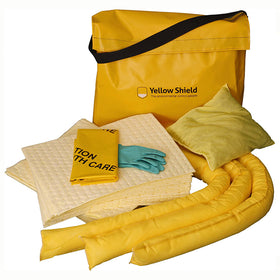
    Spill kits contain things such as absorbent pads, pillows and socks, personal protective equipment and some sort of containment bag to place the pads or socks into after use.

    General purpose spill kits

    General purpose spill kits are available in sizes such as small containers suitable to keep in the back of a vehicle, to larger spill kits that fit into a large sized wheeled bin. This means that they are easily transportable around your site or in a vehicle if necessary.

    Spill kit refills

    When you have used a spill kit, you will need to check the unused inventory of the kit and replace the items that have been used. A great idea here is to buy a spill kit refill. A spill kit refill won’t include the bin or bag that the kit was initially purchased with, but will contain the contents of that kit so you spill kit can be restocked.

    Read now
  • July 13, 2010

    Volunteers help wildlife affected by the oil spill

    On one stretch of Gulf coast, volunteers are doing their bit for the wildlife affected by the oil spill. They are collecting thousands of newly laid turtle eggs, in an attempt to give the hatchlings a better chance of survival by releasing them away from the spill site.

    While BP makes desperate attempts to fit a new spill containment cap onto the leaking riser in the Gulf of Mexico, hundreds of volunteers are helping with the wildlife clean-up operation. It is still unknown what affect the spilled oil will have on the wildlife in the Gulf, but at least some sea turtles will stand a chance. The eggs are being collected and tightly packaged into special containers that are being transported to the Kennedy Space Centre where the eggs will hatch. The hatchlings will then be released at different sites in the Atlantic Ocean, far away from the spill but also far away from their natural habitat.

    Whilst this will mean that the rate of survival for these hatchlings will increase, it unfortunately does not bode well for the population of turtles on the beaches where the eggs were retrieved. When mature, sea turtles always return to the same beaches where they were hatched many years before, meaning the beaches around the Gulf where the eggs are being taken may see a significant reduction of returning sea turtles in the future.

    Read now
  • July 12, 2010

    BP fit new cap to leaking well in the Gulf of Mexico

    In news from the Gulf of Mexico, underwater submersibles have started the process of fitting a new cap on the leaking blown-out Deepwater Horizon oil well. This is BP’s attempt to fit a cap with a tighter seal, after oil from the previous cap was still leaking uncontrollably into the Gulf. The process of fitting the new cap has however unfortunately meant the removal of the old cap, allowing thousands of barrels of oil to flow freely into the Gulf. The whole process from removal to refitting is estimated to take between four and seven days.

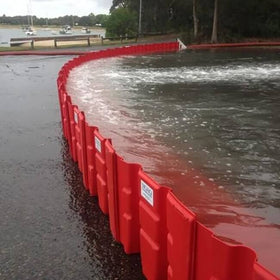
    BP is using around 400 oil skimmers on the surface above the leaking oil to minimise the impact of the extra oil loss. They are also using thousands of containment booms to stop the oil reaching land and are well under way with the drilling of two relief wells. One of which is hoped to be operational at the beginning of August. A larger spill containment vessel is also estimated to be on site soon to help with the collection of oil.

    The ill-fitting cap was removed at around 6pm on Saturday and BP hope the new cap will be able to increase the collected oil from around 20,000 barrels per day, to 50,000 barrels per day.

    Read now
  • July 11, 2010

    Bunded waste oil storage containers

    Waste oil needs to be disposed of in the correct manner. So, if you are the owner of a garage or manage an industrial site, you need a method to store the vast quantity of waste oil you accumulate, before it can be taken away for processing. The best way to do this to meet the Oil Storage Regulations 2001 is to use a bunded waste oil tank.

    Bunded waste oil tanks are specially made to store waste oil. And because of their super strong construction, they can be used in just about any industrial or commercial establishment.

    Corrosion free waste oil tanks

    Polyethylene waste oil tanks are virtually maintenance free and can withstand even the harshest of environments. Because they are made out of polyethylene, they are also completely corrosion free so are guaranteed for ten years. Bunded polyethylene waste oil tanks are available in a wide variety of sizes to suit your application and dependant on the size, can store quantities of waste oil of up to 5,000 litres. Most polyethylene waste oil tanks also have a bund capacity of 110%.

    Steel waste oil tanks

    Steel waste oil tanks can be made to store more waste oil than their polyethylene counterparts. In fact, some steel waste oil containers have a capacity of about 50,000 litres. They are made to comply with all current oil storage regulations and like polyethylene containers, have a 110% bund capacity.

    Read now