

Skip to content
❄ ❄ ❄ Announcement! Despatches are now closed for 2025 and will resume on 2nd January 2026. Click here for more info! ❄ ❄ ❄

News

RSS
  • October 6, 2010

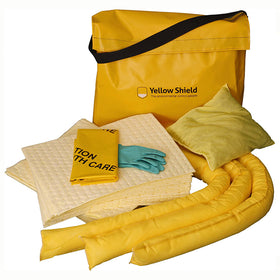
    Haulier fined after driver could not open spill containment kit

    A haulage company has been fined after a chemical leaked from one of its HGVs and turned water in a small brook blue.

    Nicholson’s Transport from Teeside, pleaded guilty to causing wood preservative to enter Shotton Beck in Sedgefield, Durham.

    The incident happened when something from a vehicle the driver was overtaking hit the side of his truck, puncturing the bulk storage container inside. The driver stopped the vehicle but could not gain access to a box containing a spill kit he was carrying. He phoned the head office and was told to use shrink wrap around the tank but could not find any so drove back to the depot.

    The liquid found its way into roadside drainage systems and into Shotton Beck, 80m of which turned dark blue as a result of the spill.

    The haulage company pumped the polluted water from the beck the same day at an estimated cost to them of £9,000. And since the incident, the company have put into place comprehensive new procedures to cope with spillages.

    The company were fined £10,000 with additional costs of £1,875 to the Environment Agency.

    An Environment Agency management team leader stated:

    "This court case shows that everyone is responsible for the protection of the environment.

    "Carriers of potentially harmful chemicals need to be extra vigilant and ensure that the appropriate authorities are notified immediately if there is a spillage."

    Read now
  • October 5, 2010

    Spill containment flood barriers

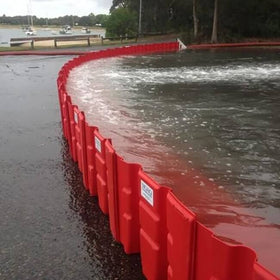
    Whether containing a large quantity of spilled liquid or providing a suitable flood barrier to prevent the ingress of water to a protected site, flood defence barriers are easily the best available option.

    Flood defence barriers can provide a water tight seal with the ground, preventing any leakage of water or spilled liquid under the barrier. And when stacked using other flood barriers, can form a barrier up to 2 metres in height.

    Because flood prevention barriers can be fitted together, the length created is effectively unlimited. They are also available in a huge combination of sizes and widths suitable for your specific application.

    Flood barriers are easy to assemble and because they are filled with water can be filled quickly from the mains water supply when needed. When the barrier is no longer needed, the water can be left to drain into the ground and the barrier folded away for easy storage. Flood barriers can be deployed quickly and because of their water stopping characteristics, can prevent the ingress of a flood from a river, stream or even the sea.

    If you live in a frequently flooded part of the country, a flood barrier is a wise investment.

    Read now
  • October 4, 2010

    Exposure to hazardous substances and spill risk (Part 2)

    In the last article we discussed the ways by which your employees could come into contact with a hazardous substance. In this article we will focus on risk assessment and what processes you can put into place to cope with a hazardous substance spill.

    COSHH regulations state that every employer should assess the risk of using hazardous substances. When they know the risk, employers should then do what is necessary to control and prevent the risk.

    When there is little chance of a harmful substance escaping or coming into contact with a person, the risk can be described as low, but when a substance leaks or is spilt, the risk will of course be higher because there is a greater likelihood of coming into contact with the substance. Because of this, different risk assessments need to be done to cope with different situations when using the substance.

    As part of these risk assessments, you may find you have to install spill cleanup kits at various locations around your site. Or you may have to make fuel or chemical absorbents readily available to employees. You may also need to train employees in the best way to safely tackle spills, so the risk of them coming into contact with the substance is eliminated.

    Employers that have five or more employees need to record the risk assessment and the steps needed to control the risk.

    Read now
  • October 4, 2010

    Exposure to hazardous substances and spill risk (Part 1)

    Working with hazardous substances, such as chemicals and fuel oils, carries some degree of risk. Over the next two articles, we are going to discuss this risk and examine in a little detail what you should be doing to help your employees, who have to use these substances every day.

    What substances do you use?

    Every industrial site uses hazardous substances, from the lubricating oil you can buy from your local DIY store, to hazardous chemicals that you may need a licence to use. Whatever substance you use, you need to work out how your employees may be exposed to the substance so you can construct an action plan to minimise risk and respond to problems.

    • Is the substance used harmful to breathe in?

    • Is it harmful if it comes into contact with the skin?

    • Can it cause problems if it comes into contact with the eyes?

    • What are the consequences of swallowing the substance?

    • What effects will occur if the substance enters the body through a skin puncture?

    Harmful substances can enter the body through any of the above routes and hence contaminate the person using them. If the product is harmful, it will have a hazard symbol printed on the product. ‘Dangerous for supply’ products should also come with a safety sheet detailing the risk to employees.

    In the next article we will discuss assessing employee risk and spill prevention techniques.

    Read now
  • October 3, 2010

    Tank decommissioning and installation

    If you have an old fuel storage tank, you may be wondering how to get rid of it and comply with the current disposal of fuel items regulations. If you use a specialist tank removal and installation service, they can make sure that everything is done properly and provide you with the appropriate legal and environmental certification so everything is done correctly.

    Bunded tank decommissioning experts

    The decommissioning engineers will work with the relevant local authorities and carry out a site assessment before stripping out pipework and decommissioning the tank. The tank will then be transported to a licensed waste disposal depot. In addition to this, all the necessary documentation will be handled by the decommissioning engineers.

    Bunded tank installation specialists

    After decommissioning your old tank, the new bunded tank can be installed. The engineers will make sure the site chosen is suitable and will prepare the base and install any necessary pipework and pumping equipment. A test of all equipment installed will complete the installation before the new tank is signed off.

    Comply with the latest fuel storage regulations and install a bunded tank.

    Read now
  • October 2, 2010

    Different materials handling equipment

    If you have deliveries of large items at your industrial site, you need to have the right equipment available so you can move these deliveries to their designated locations.

    Drums of oil and heavily loaded pallets can be extremely heavy and awkward to handle. Below is a list of materials handling equipment that every large factory should own.

    Sack trucks

    Sack trucks are perhaps the most common type of materials handing equipment found at industrial sites. There ease of use, combined with the efficient way they can be adapted to carry heavy loads makes them a great choice. Some sack trucks are fitted with combination wheels on the corners so they can be pulled up and down stairs.

    Hand pallet truck

    Hand pallet trucks are really useful at moving heavily loaded pallets at an industrial site. Because the pump lift truck uses hydraulics, lifting heavy loads is made easy. The load can then be pulled or pushed using the handle. Some pallet pump trucks have a high level lift, so items can be lifted in excess of 80cm making deliveries and loading of racking even easier.

    Read now
  • October 1, 2010

    Kalamazoo oil spill

    While there is much discussion in the UK regarding the oil spill in the Gulf of Mexico, there has been little media coverage outside the US regarding another oil spill the happened in Michigan in July.

    Just under a million gallons of oil spilled into the Kalamazoo River in July leaving wildlife and local residents with a big problem. The spill did not happen from a refinery or from leaking tanks but from a leaking pipeline 100 miles west of Detroit.

    National Wildlife’s Tim Warman stated at the time of the incident:

    "The pattern that we see here is a pattern of inadequate oversight and supervision [the government]...,"

    The spill in Michigan happened on the 25th of July when the 30 inch diameter pipe that carries oil from Canada to the refineries in the mid west broke.

    The spill wasn’t noticed until the next day, after nearly 20,000 barrels of oil flowed into Talmadge Creek that feeds the Kalamazoo River.

    The Pipeline and Hazardous Materials Safety Administration (PHMSA), who carry out inspections on pipelines, are coming under close scrutiny in the US and have promised more inspectors and new rules in response.

    The quicker a spill response is actioned, the quicker spill containment and cleanup devices can be put in place to cope with a spill. It’s hoped that the changes the PHMSA make to the way they work will have a beneficial effect on their spill response times in the future.

    Read now
  • September 30, 2010

    The different types of absorbent materials

    One of the best ways to soak up spills is by using absorbent materials. And, absorbent materials are now manufactured especially to soak up certain types of liquid spills. They are available in types such as:

    Absorbent pillows

    It’s the flexibility of absorbent pillows that makes them perfect for mopping up spills. Their flexible shape, that can be packed into tight spaces and their ability at soaking up pooled spills, means they are perfect to keep at any industrial site.

    Absorbent pads

    Absorbent pads are great to use to mop up smaller spills. They can be purchased in three different weights depending on the absorbency you need and are also manufactured to cope with specific spills such as chemical spillages.

    Absorbent pads are really easy to keep at the ready and perfect to use in drip trays. They are a critical component of any spill kit.

    Absorbent socks

    In much the same way as a spill containment boom works to stop a liquid spill further contaminating an area, absorbent socks are perfect to use at industrial sites to stop the flow of a still leaking machine.

    Absorbent granules

    Granules are perhaps the quickest method of soaking up spills and because they are in granule form, you only have to use the amount of granules you need to soak up the spill, meaning there is no absorbent wastage.

    Read now
  • September 29, 2010

    Fuel spill in St. Lawrence Seaway

    A fuel spill at a Montreal refinery could have had severe consequences for the St. Lawrence Seaway, had local residents not noticed a fuel type smell near one of the reservoirs owned by the site.

    The spill happened on Tuesday night at the Port of Montreal and originated from the Suncor owned refinery.

    Melissa Kent from CBC reported:

    "Firefighters were first called to the scene just after 8:30 last night after neighbours called to complain about a strong fuel-like smell,"

    The length of the spill was estimated to be 2.5km long before Suncor officials stopped the flow. They fenced the spill using spill containment booms and then collected the fuel by pumping water into the reservoir so the fuel could rise to the top where it was skimmed off using skimming machines.

    The spill cleanup is currently being monitored by Environment Canada and Environment Quebec.

    Spill booms are the perfect spill containment device to use in instances such as the spill in the St. Lawrence Seaway. The spill can be contained quickly and efficiently and can then be dispersed or collected, minimising the effect on the environment.

    Read now