
Skip to content
❄ ❄ ❄ Announcement! Despatches are now closed for 2025 and will resume on 2nd January 2026. Click here for more info! ❄ ❄ ❄

News

RSS
  • November 8, 2010

    Fuel spill at Hanley Castle

    A fuel spill after a road collision last Tuesday left fire fighters with a mammoth spill cleanup task on their hands.

    Fire crews were called after a tractor and van collided in the Hanley Castle region last Tuesday. The incident happened on the B4211 just before rush hour.

    Due to the incident over 100 litres of hydraulic fluid spilled into the road and both vehicles were left immobile. Fire crews from stations at Upton and Evesham spent about two hours at the scene using absorbents and other spill control equipment to make the area safe and clean up the spill.

    The vehicles were eventually removed and the road reopened at about 18:45pm.

    Fuel spills due to road accidents are unfortunately commonplace, so it’s important for the emergency services to carry specialist spill control equipment that can stop spills spreading and absorb spilled liquids.

    To mop up spilled liquids, there are many products on the market, including absorbent mats, pads, socks and pillows. With many types of spill control and clean-up equipment available, its important to have the right type of equipment should you have a spill.

    Read now
  • November 7, 2010

    Chemical spill at Dedridge Burn prompts spill action plan

    A chemical spill at a nature spot in Dedridge has prompted concerned residents to put an action plan in place should a further spill occur.

    After residents discussed the matter with the local council, a meeting has been scheduled between the community councils, Scottish Water, The Scottish Environment Protection Agency and Brucefield industrial estate.

    The chemical spill and resulting fire happened on the 16th of September and destroyed the Amcor Flexibles building adjacent to the popular nature spot.

    When the fire occurred, chemicals and run off water from the attempts to put out the fire polluted the burn.

    A council executive report stated:

    “By the Thursday evening, it was apparent that pollution was affecting the Dedridge Burn resulting from chemicals released during the fire and the firefighting operation.

    “Council officers received calls from people living in Dedridge concerned that the burn had turned a milky white shade and was emitting a powerful odour.

    “The vinyl film was reported by SEPA as being harmless, elevated levels of chronium appeared to be the greatest cause for concern. Normally present in small quantities, this heavy metal was present in considerable quantity and with the potential for harm.

    “Recent analysis shows that levels have reduced substantially since the incident, but remain elevated.

    “The smaller pond, adjacent to the Lanthorn Community Centre, and the Bellsquarry pond, located in the Bellsquarry wood and owned by Woodland Trust Scotland, were both badly affected.”

    The report also stated that the council had put measures into place to improve the runoff from the factory but had not put adequate spill control measures into place to cope with chemical spills.

    Read now
  • November 6, 2010

    Spill containment booms

    Spill containment booms are of paramount importance in any large spill response plan. This type of spill control equipment was used to great effect in the Gulf of Mexico oil spill recently and stopped huge quantities of oil reaching the coast of four Gulf States.

    Absorbent booms

    Oil absorbent booms are extremely absorbent items that can help in the containment and clean-up of spills. Booms that are used in a marine environment are excellent at stopping oil on the sea surface reaching an uncontaminated area. Oil booms are made to absorb oil whilst repelling water so can remain floating on the sea surface, even when fully saturated.

    Containment booms

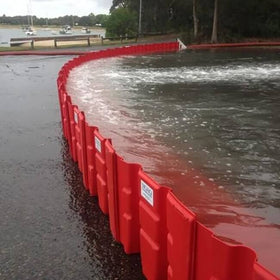
    Oil containment booms are another type of boom that can be used in an emergency spill scenario. Whilst not being able to absorb oil, they can stop the oil or other spilled liquid reaching unaffected areas. Containment booms can be connected together, creating barriers of unlimited length. Being inflatable, these booms can be stored easy and deployed quickly, reducing the impact of a spill on the surrounding environment.

    Read now
  • November 5, 2010

    BP back in profit

    After making significant losses over the last eight months, oil giant BP has just recorded its first monthly profit.

    BP had made consistent loses since the Deepwater Horizon oil rig disaster that saw the loss of eight lives and hundreds of thousands of gallons of oil being spilt in the Gulf of Mexico.

    Between April and June the firm recorded losses of $17bn, but the cost profit for the period in the three months up to September was $1.85bn.

    The previous loses can of course be attributed to the oil spill, with new chief executive recently stating that the company have now spent $39.9bn on clean-up costs and compensation claims. The news of the profit was received well by the financial markets and BP’s share price actually rose by 6% when it was announced. This can also be attributed in part to the company’s new theme promoting itself with safety as a priority.

    Only last week, investigators in the United States of America said that the cement that was used to seal the well could have played a contributory factor in the explosion. The cement contractor Halliburton had done tests on the cement and discovered that the compound used was unstable. Halliburton however said the tests were invalid as they were on a different type of cement. The row rumbles on.

    Read now
  • November 4, 2010

    Spill kit refills

    Having a number of different spill kits at various locations around your industrial site is a great way to be prepared if a spill should occur. These kits can be positioned nearest the areas that are likely to suffer a spill and can be marked accordingly, so employees know their specific use.

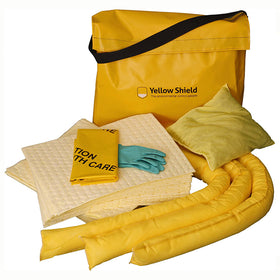
    Some spill kits come in small bags that can be carried over the shoulder and some come in sizes that have to be contained within a push-along bin. They contain items such as absorbent pillows, absorbent pads, absorbent socks and everything you need to cope with the containment and clean-up of a spilled liquid.

    If you use part of your spill kit when you have a spill, you will need to replace the components that you have used. It isn’t cost-effective to buy a complete new kit, so the best thing to do is to take an inventory of the items you have used and items you have spare and replace only the needed items.

    Spill kit refills are the perfect way to replenish the spill kit items you have used and create a stock level of spare items. Having spare items will mean you can refill the kit immediately after a spill, so the kit you have is ready to be used immediately should another spill occur.

    Read now
  • November 3, 2010

    Spill absorbents

    Spill control should be on the agenda at every yearly management meeting for those who run an industrial site. The spillage of hazardous liquids can have a damaging affect on the environment and can cause serious health issues for your employees. If you haven’t got a spill control and containment or cleanup procedure in place, now is the time to look at what is involved.

    Spill containment and cleanup equipment:

    Absorbent pads

    One of the most commonly used spill cleanup items, absorbent pads can be quickly and easily deployed and are available in specific types to deal with fuel, oil or chemical spills.

    Absorbent pillows

    Absorbent pillows have a much larger absorbency factor then absorbent pads and are the perfect spill clean-up device for collecting pooled liquid. Their multi-purpose shape means they can be pressed into tight spaces to stop the overflow of a spilled liquid and they come in types that can absorb chemicals, oil and general purpose liquids.

    Absorbent socks

    Absorbent socks are not just great at absorbing spilled liquid; their long slender design can be used to create a barrier that stops the liquid contaminating further areas while still absorbing the spill.

    Absorbent granules

    Absorbent granules are perhaps the quickest type of absorbent material to use in an emergency. Because you control the amount of granules you use, you only have to deploy what is needed saving money and resources.

    Read now
  • November 2, 2010

    What is bunded storage?

    At any site that uses hazardous liquids or chemicals, there need to be provision to store these liquids safely. The haphazard storage of oil drums and tanks is not just dangerous to the employees who may come into contact with a liquid should it be spilled, it can also be damaging to the environment if a substance is spilled and not contained. More importantly, it is also against current regulations to not have procedures and equipment in place to stop liquids spilling.

    What is a bund?

    There are many different types of liquid storage containers and liquid storage vessels you can now buy that contain a bund. But what is a bund?

    A bund is a secondary containment area in a tank or a drum where spilled liquid can collect if the original storage area fails. For example, a bunded liquid storage tank may have a bund capacity of 110%. The bund in a storage tank can thus cope with handling 110% the capacity of the standard storage area within the bunded tank.

    Bunded storage containers

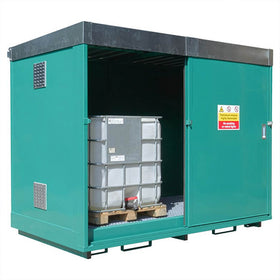
    There are lots of different bunded storage facilities available for the industrial user. Bunded storage containers can hold a number of standard drums but if any or all of the drums leak, the container has an area under the drums to collect the spilled liquid.

    Using a bunded storage vessel will ensure that if the tank or drum fails, the contents will be contained. This lowers the chances of your employees being affected by a spill, lowers the chances of the spilled liquid causing damage to the environment and brings you in line with current hazardous storage regulations.

    Read now
  • November 1, 2010

    The different types of PPE

    There are many systems in place that look after the health and safety of employees, whether at a private office block or an industrial site. The employers have a duty of care to look after those people who work for them and to make sure that they have all the equipment necessary to complete their allotted tasks without suffering any harm or being exposed to any damaging substances.

    If you work at an industrial site, you will be aware of some of the different types of Personal Protective Equipment (PPE) listed below.

    Safety goggles

    Safety glasses and goggles are an essential piece of safety equipment when there is a chance of a dangerous materials or substances getting into an employee’s eyes. They may be worn when an employee is handling hazardous liquids, to stop accidental splashes of the liquid entering the eyes or for example when using a power drill

    Nitrile gloves

    Many industrial sites are not clean environments. Workers may thus be exposed to contaminated surfaces if they do not wear protective coverings on their hands such as nitrile gloves. Wearing gloves protects the employee from coming into contact with hazardous substances and they should always be worn when handling food or cleaning up a spilled liquid.

    Ear defenders

    In some industries the machinery used can generate a lot of noise. In some cases this can exceed the allowed decibel level if an employee is exposed to the noise for long periods of time. In cases like this the employee should be given and wear ear defenders.

    Read now
  • October 31, 2010

    Don’t let hazardous spilled liquid enter the drainage system

    If you have a spill at your industrial site, you will not just have to contain and clean the spilled area, you will need to make sure the spilled liquid does not find its way into the waste water system where it could be a hazard to the environment.

    To stop spilled liquids making their way into grids, gulleys and drains, there are a range of different drain covers available.

    Plug Rug

    A Plug Rug is a drain cover that can be moulded to the dimensions and shape of the drain. It’s a water tight versatile solution that is available in a range of sizes creating an instant seal, resistant to many chemicals and fuel and oils spills.

    Neoprene drain covers

    Neoprene drain covers are a cost effective way to stop spilled liquid entering the drainage system. The cover can be used on a variety of surfaces and because it is made out of neoprene it can be used many times.

    Polyurethane drain covers

    Polyurethane drain covers can stop hazardous spilled liquid entering the drainage system easily. Being slightly sticky they can effectively seal the drain and can be used many times over after they have been washed.

    Read now